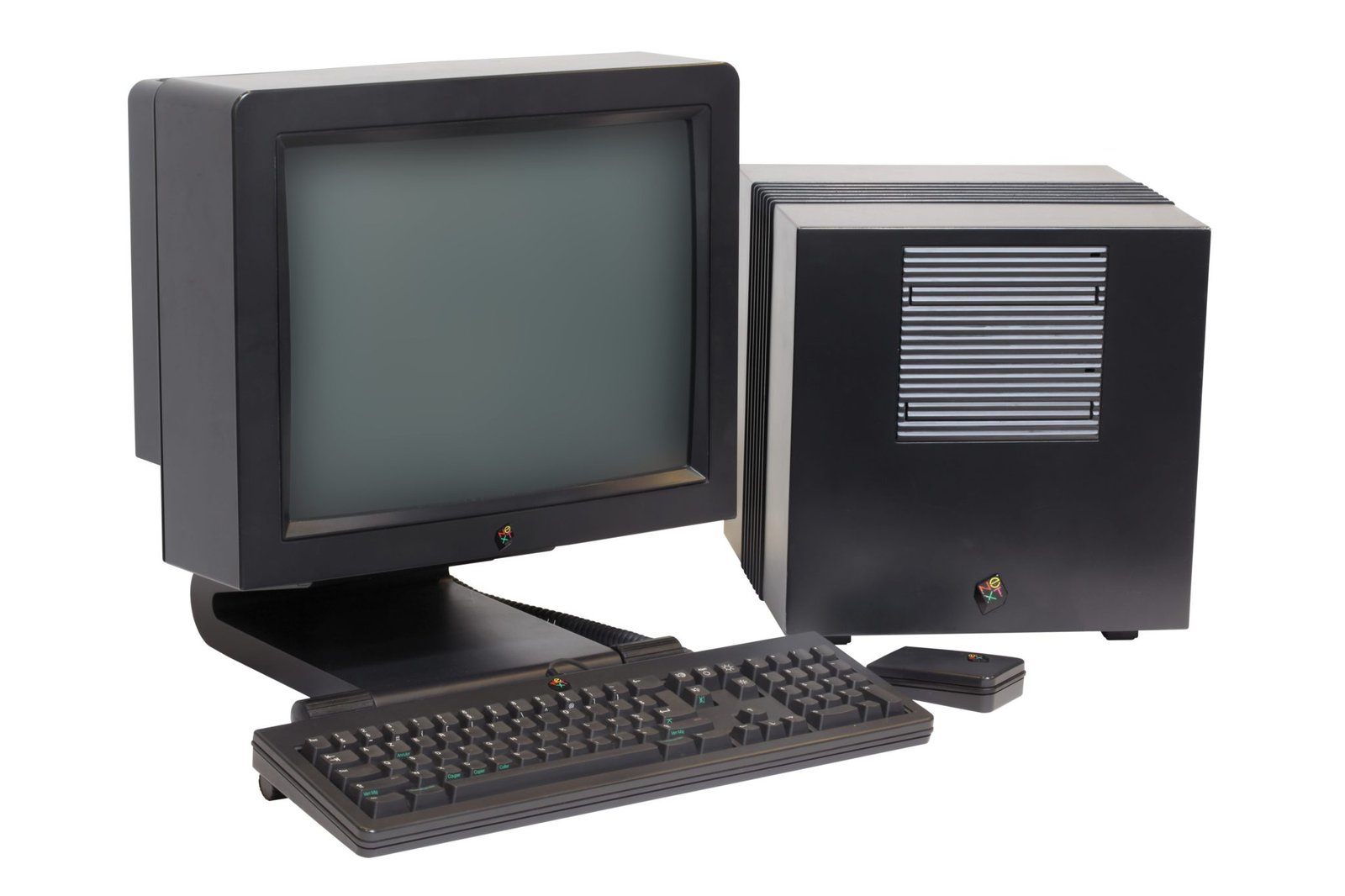
🖥️ 37 Years Ago This Week: Steve Jobs Unveiled the NeXT Computer — The Black Cube That Shaped Apple’s Future
By Annemarije de Boer
Published: October 16, 2025
Estimated Read Time: 2 Minutes
💡 The Moment That Redefined Computing
On October 12, 1988, Steve Jobs took the stage at San Francisco’s Davies Symphony Hall to reveal something extraordinary — the NeXT Computer, a sleek, one-foot black magnesium cube that represented the future of computing.
Priced at $6,500 (about $17,300 today), this workstation was built for universities and research labs. Despite its high price, it was years ahead of its time in both design and technology.
⚙️ The Cube That Predicted the Future
The NeXT Computer wasn’t just another personal computer — it was a glimpse into the connected digital world we live in today.
🔧 Groundbreaking Hardware Features:
- Built-in Ethernet networking: While most computers operated in isolation, NeXT machines were ready for networked collaboration.
- 256MB magneto-optical drive: A futuristic storage medium that made floppy disks instantly obsolete.
- Digital Signal Processor (DSP) chip: Enabled real-time audio processing — something unheard of at the time.
- Motorola 68030 processor @ 25 MHz with 8MB RAM and a 17-inch high-resolution display (1120×832) — stunning for 1988.
This elegant cube wasn’t just beautiful — it was technologically daring, offering features that wouldn’t become mainstream for another decade.
💻 Software That Changed Everything
The NeXT Computer ran an operating system called NeXTSTEP, a software environment so advanced that its DNA still runs through macOS, iOS, and iPadOS today.
✨ NeXTSTEP’s Revolutionary Features:
- Introduced the Dock and Shelf, visual interface elements still central to Apple’s macOS.
- Used object-oriented programming frameworks, which transformed how developers wrote and reused code.
- Powered by Display PostScript, allowing resolution-independent, crystal-clear graphics and text.
Developers who used NeXTSTEP often described it as “a window into the future”. It showed them how computing could be elegant, visual, and deeply human.
💸 Too Advanced — and Too Expensive
Jobs targeted universities and research institutions, but most couldn’t justify its high price.
The magneto-optical drive, while innovative, was slow and expensive, making the NeXT impractical for everyday use.
In short, it was a masterpiece the world wasn’t ready for — a product ahead of its time that failed commercially but succeeded philosophically.
🌍 A Legacy Written in Code
Even though NeXT Computers sold in small numbers, their influence was enormous:
- Tim Berners-Lee used a NeXT Computer at CERN to create the first web browser and server, literally building the World Wide Web on it in 1990.
- When Apple acquired NeXT in 1997, it wasn’t just reclaiming Steve Jobs — it was also acquiring NeXTSTEP, the foundation for what would become macOS and iOS.
Every time you unlock your iPhone, open your MacBook Dock, or build an iOS app, you’re interacting with ideas born inside that 1988 black cube.
🧭 The True Legacy
The NeXT Computer proved that visionary design doesn’t always succeed immediately — but its ideas can echo for decades.
It was the machine that failed in sales yet succeeded in shaping the modern digital world, redefining how people interact with computers, software, and the internet itself.